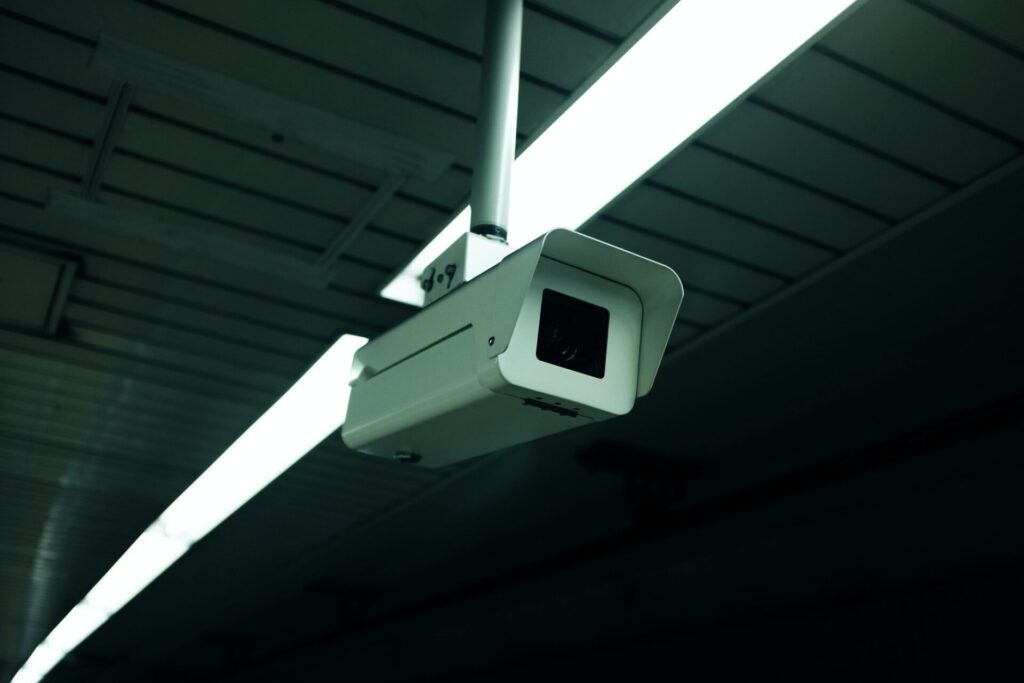
AI workplace surveillance has reached federal parliament’s agenda. On 20 October 2026, the University of Technology Sydney’s Human Technology Institute (HTI) released Drawing the line, a report calling for the Fair Work Act to require that any monitoring of workers be “fair and reasonable”. HTI is due to present its findings to the parliamentary AI inquiry this week, as hearings turn to AI in the workplace. If your business uses software that tracks, scores or analyses staff, or is about to buy or build it, now is a good time to check where your tools sit.
Here is what the report proposes, why the current law is unclear, where the line is likely to fall, and checklists for employers and for teams building AI that touches staff data.
What the HTI report proposes
HTI says AI-powered surveillance of workers is outpacing Australian law. In its announcement, co-director Professor Edward Santow said the law neither protects workers from harmful surveillance nor gives employers clarity about what monitoring is acceptable. The report recommends:
- A “fair and reasonable” test in the Fair Work Act. Any worker monitoring would have to meet it, assessed against flexible factors such as necessity, reasonable expectations, transparency and proportionality.
- A complaints stream in the Fair Work Commission for privacy-related workplace complaints.
- Room for enterprise agreements and modern awards to build on the baseline, including a model consultation clause for new surveillance tools.
- Practical guidance from regulators such as the Fair Work Ombudsman.
It also proposes a ministerial power to ban specific surveillance products that pose an unacceptable risk, after public consultation. The report names smart glasses as a possible candidate and says emotion recognition may also meet the threshold, noting the European Union has banned emotion recognition in workplaces.
The test builds on the Government’s own exposure draft of the Privacy Amendment (Personal Data Protection) Bill 2026, released in August, which would require personal information generally to be handled fairly and reasonably.
Why the law is a grey area today
Most employers assume monitoring is lawful if staff agreed to it in their employment contract. HTI argues that consent is rarely genuine, because refusing could cost someone the job. The legal framework underneath is patchy:
- The Privacy Act has an employee records exemption. According to the OAIC, a private sector employer’s handling of employee records is exempt from the Australian Privacy Principles where it relates directly to a current or former employment relationship. The exemption does not cover unsuccessful job applicants, volunteers, or contractors such as recruitment and HR service providers handling another organisation’s employee data.
- State laws differ. Only NSW and the ACT have dedicated workplace surveillance laws. Other states rely on general surveillance devices laws, which focus on devices rather than practices and are hard to apply to AI.
- States are moving. HTI notes NSW has passed the Work Health and Safety Amendment (Digital Work Systems) Act 2026, extending work health and safety obligations to AI and digital systems that allocate work. In Victoria, Premier Jacinta Allan promised in July laws requiring employers to tell workers when they are monitored, consult before introducing new surveillance, have a human review significant automated decisions made using surveillance data, and give workers access to their own data.
HTI’s point is that both sides lose: workers lack protection, and employers cannot be confident what lawful monitoring looks like.
Why it is in the news this week
The Joint Select Committee on Artificial Intelligence holds hearings in Sydney on 20 and 21 October and in East Melbourne on 22 October. Guardian Australia reports the committee will focus on AI in the workplace this week, with several unions appearing. It also reports the retail workers’ union said in its submission that a supermarket cashier received a final written warning after an AI monitoring system flagged an error rate of 0.18%, about one error every 533 items scanned.
Public sector bargaining is another flashpoint. The Canberra Times reports that the Community and Public Sector Union wants enterprise agreements to include protections against AI being used for surveillance, performance assessment, recruitment or promotion. The Australian Public Service Commission instead proposes covering AI through learning and development and consultative committee conditions, warning that a standalone clause could quickly become outdated.
Awareness is low but rising. A March 2026 poll commissioned by the Minderoo Foundation, cited in the report, found 43% of Australians knew some employers use technology including AI to monitor workers, but only 9% knew it was used in their own workplace.
Where the line is likely to fall
The report includes worked examples showing how a fair and reasonable test would apply. In broad terms, monitoring focused on tasks and work processes is more likely to be legitimate, while monitoring of a worker’s personal life or characteristics is less likely to be.
- Likely legitimate: GPS tracking in delivery vehicles for routing, deliveries and safety, explained at induction, with a dashboard notice and the ability to switch it off after hours when the vehicle is used for personal trips.
- Context dependent: location data, communications on work devices, and customer or team interactions.
- Likely illegitimate: an AI system that scores call-centre staff for “negative sentiment” and automatically downgrades their KPIs without explaining how. HTI points to the accuracy and discrimination problems of sentiment tools, and to less intrusive options such as customer surveys.
- Purpose creep: AI cameras installed on a construction site to flag safety hazards should not then be used to assess workers’ performance.
- Less intrusive first: using location tracking apps to record office attendance would not be reasonably necessary when a sign-in system does the job.
A checklist for employers using AI tools
None of HTI’s proposals is law yet, but the direction is clear across federal and state proposals. These steps are sensible now:
- List every tool that collects worker data. Include features built into everyday software, not just dedicated monitoring products. The report names Microsoft Teams as a common platform with embedded monitoring capability. Add call recording and analytics, fleet telematics, cameras, access systems and productivity dashboards.
- Write down the purpose of each. Name the specific business reason, such as safety or security, and check whether a less intrusive option would achieve it.
- Block secondary use. Data collected for safety should not drift into performance management. Check vendor terms too: the report notes monitoring data can be used to train AI models.
- Be specific with staff. HTI says a high-level policy that does not explain which tools are in use, and why, would not be transparent enough. Consult before introducing or changing monitoring.
- Keep a human on decisions. Managers should personally review AI-informed decisions about hours, discipline or performance, and workers should be able to question them.
- Test for accuracy and bias. The report warns productivity tools can disadvantage workers with disability or flexible arrangements, and that emotion recognition can be less accurate for culturally diverse and neurodiverse people.
- Check your state’s rules. Notice requirements differ, and NSW and Victorian changes are under way.
An AI business audit is a structured way to run this inventory across HR, operations and IT, and here is what an AI audit includes. If you are also writing a staff AI use policy, our free AI in the workplace course walks through one based on Australian guidance.
If you are building or buying AI that touches staff data
The same principles become design decisions:
- Measure the process, not the person. Where the goal is throughput or quality, design around operational and aggregate metrics before reaching for individual scores.
- Put an approval step before consequences. AI can draft, flag and summarise, but a person should decide anything that affects someone’s job. Our AI agent developers page covers how we design hand-offs and access limits.
- Minimise and expire data. Collect only what the stated purpose needs, set retention periods, and keep the logs that show who accessed what. A governed LLM integration layer with access controls and review queues helps when model outputs feed decisions.
- Keep camera AI on its purpose. For safety vision, zone-based checks without face matching and on-site processing reduce privacy risk. Our free computer vision workplace safety course covers PPE detection, edge processing and surveillance law, and our computer vision work starts with purpose, retention and human review.
- Treat recruitment AI separately. The employee records exemption does not cover unsuccessful applicants, so for businesses covered by the Privacy Act, its duties apply to their data. From 10 December 2026, privacy policies must also describe significant decisions made or informed by computer programs; see our guide to automated decision-making and the Privacy Act.
For HR automation such as recruitment intake, onboarding and policy questions, we build in purpose limits and human review on hiring decisions from the start.
What to watch next
The inquiry must report by 30 November 2026. Watch for its recommendations on AI in the workplace, the final form of the Privacy Act fair and reasonable requirement, Victoria’s promised legislation and the outcome of APS bargaining. Each could turn today’s good practice into a legal expectation.
This is general information about Australian law reform proposals and current rules, not legal advice. Workplace monitoring obligations depend on your state or territory, your industry and your agreements. Get advice from an employment or privacy lawyer about your circumstances.
Check your workplace AI before the rules tighten
An AI business audit lists every tool that collects or scores staff data, records its purpose and who reviews its outputs, and flags less intrusive options. Aideveloper builds HR and operations AI with purpose limits, human review and logging built in. Talk to us about a review or a build.
Featured image: Photo by Alex Knight on Pexels.